Ambassador Mark Green, President and CEO of ONE, providing the key note remarks at the June 4 congressional briefing hosted by MFAN. /Photo credit: Jessica Benton Cooney, MFAN
How can countries continue improving on health, education, and economic development as aid budgets shrink, debt burdens rise, and governments are asked to finance more of their own development priorities?
That question was at the center of a June 4 congressional briefing hosted by the Modernizing Foreign Assistance Network (MFAN) and the Consensus for Development Reform (CDR) in conjunction with the Congressional Caucus for Effective Foreign Assistance. The briefing included keynote remarks from Ambassador Mark Green, President and CEO of ONE and former USAID Administrator.
Participants explored how countries can sustain development progress with fewer external resources.The conversation focused on strengthening domestic financing, attracting private investment, and building the institutions needed to support long-term growth, while also addressing challenges related to governance, implementation capacity, and financial sustainability.
The timing is particularly significant. Donor governments are reducing development spending, many countries face growing fiscal pressures, and the United States is reshaping its foreign assistance architecture. At the same time, policymakers are placing renewed emphasis on country self-reliance, including through new U.S. bilateral global health agreements that require partner governments to assume a larger share of program costs. With government-to-government (G2G) assistance serving as the primary implementation mechanism, questions of oversight, institutional capacity, and long-term sustainability have become increasingly important.
As MFAN Executive Director Tod Preston, who moderated the panel discussion, noted: "As the U.S. international assistance system undergoes transformation, central to making it highly impactful and fit for purpose is ensuring that U.S. investments are helping countries tap other sources of financing and invest more of their own resources to improve their citizens' health, education, and economic well-being."
The discussion highlighted six important lessons for policymakers as they navigate this transition.
In his keynote remarks, Ambassador Green said that development discussions must move beyond focusing solely on aid volumes and instead focus on how countries can generate, manage, and invest more of their own resources.
"We need to ask ourselves how we can help countries mobilize and deploy far greater resources on their own. The long-term goal of development should never be creating dependence on foreign assistance. It must be helping countries achieve self-reliance,” he said.
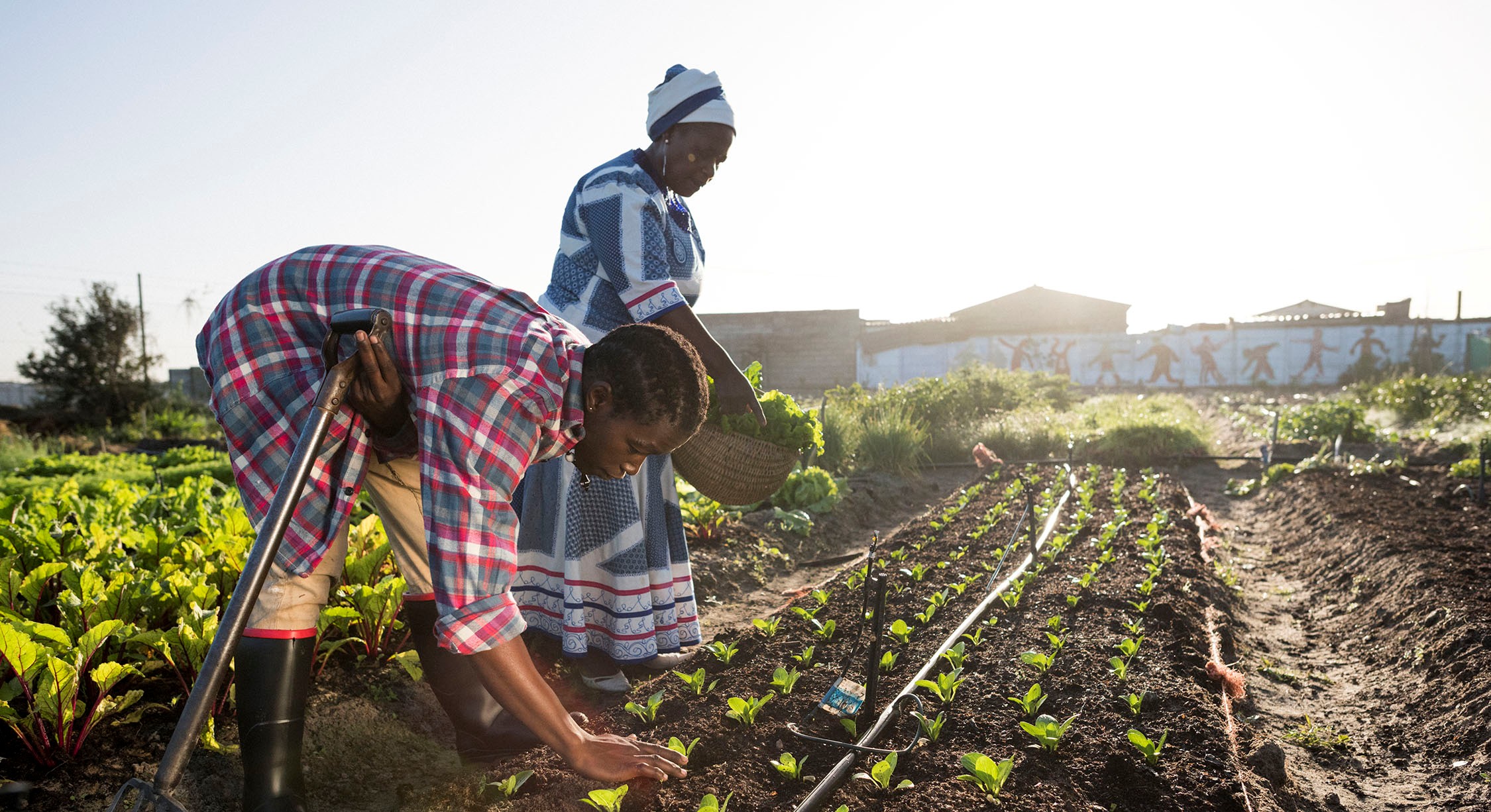
That vision has long guided many of the most successful development programs. Countries do not want to depend indefinitely on external assistance. They want the capacity to solve their own challenges and finance their own priorities.
A central theme throughout the discussion was the importance of United States assistance for domestic resource mobilization (DRM).
At its core, DRM means countries generating, managing, and investing their own resources more effectively. That includes improving tax administration, strengthening public financial management, broadening the tax base, and ensuring governments can sustainably finance essential services.
A recent Devex article “The ‘Journey to Self-Reliance’ is back, but still fraught with hurdles,” noted that DRM has reemerged as a central pillar of U.S. efforts to promote country self-reliance, while highlighting the significant time, capacity, and political commitment required to translate that ambition into reality.
That emphasis on helping countries mobilize and manage their own resources was central to Ambassador Green's "Journey to Self-Reliance" approach during his tenure as USAID Administrator and featured prominently in his keynote remarks at the briefing. Green argued that the long-term goal of development should be helping countries build the capacity to finance their own futures. "Countries want to solve their own challenges, they want to chart their own future, and as friends and allies, we can help them strengthen the capacity and commitment to do just that."
Drawing on examples from countries such as Rwanda and the Philippines, Ambassador Green noted that relatively modest U.S. investments in revenue collection and financial management can unlock substantial resources for health, education, and other national priorities.
The United States has long supported these efforts through agencies including USAID, the Treasury Department, and the Millennium Challenge Corporation. However, U.S. support for domestic resource mobilization has often been fragmented and under-resourced, lacking both a dedicated funding stream and a coordinated interagency strategy. As countries are increasingly expected to finance a larger share of their own development priorities, strengthening, increasing and better coordinating of DRM assistance from the United States will become even more vital.
However, Ambassador Green was equally clear that domestic resources alone will not be enough to meet the scale of today's development challenges. "Domestic resources alone are not enough. We must also mobilize private capital,” he said.
He also pointed to innovative financing mechanisms and public-private partnerships as important tools for leveraging additional investment and accelerating country self-reliance. Ultimately, he argued, development assistance is most effective when it helps countries build the systems and institutions needed to sustain progress long after donor support has ended.
While panelists agreed on the importance of country self-reliance, they also emphasized a difficult reality: transitions take time.
Ebele Achor, Vice President for Capacity Development and Innovation at Pact, described the financing gap facing many countries as both significant and growing. "The gap is real, it is large, and it is growing faster than most countries can possibly adjust."
Many low- and middle-income countries entered this period already struggling to adequately finance essential services. Even where opportunities exist to raise more domestic revenue, reforms require political commitment, institutional capacity, better transition planning, and sustained implementation.
"I think the biggest barrier to DRM is time," Achor said.
That observation is particularly relevant as countries are being asked to assume greater financing responsibilities under increasingly ambitious timelines. While self-reliance remains the right objective, progress is unlikely to happen on the quick schedule many current financing frameworks envision.
The Administration's new global health agreements featured prominently throughout the discussion.
Under these agreements, partner countries are expected to gradually take on a larger share of the cost of their health programs. The idea is straightforward: countries should eventually be able to finance more of their own health needs rather than relying heavily on foreign assistance.
The challenge is that many countries are being asked to do this at a moment when their budgets are already under significant pressure.
Priya Sharma, Senior Advisor at CrossBoundary, highlighted what she described as a growing gap between expectations and reality. "There is a massive disconnect between the co-financing ambition of these agreements and the actual capacity of countries to provide it."
Many governments are already struggling with high debt payments, rising costs, and competing demands on limited public resources. In some countries, more money goes toward servicing debt than funding health or education.
At the same time, many of the U.S.-funded programs that helped governments strengthen tax systems, improve budgeting, and manage public finances have been reduced or eliminated.
The result is a difficult balancing act. Countries are being asked to contribute more of their own funding to health programs, but many lack the resources and systems needed to do so.
While discussions about self-reliance often focus on governments, panelists stressed that sustainable development depends on accountability, transparency, and citizen engagement.
"We see civil society as essential for countries' self-reliance," Achor said.
Civil society organizations help monitor public spending, represent community perspectives, and ensure development investments respond to local priorities. They also serve as an important bridge between citizens and policymakers, helping build trust and accountability.
Simon Stack, Policy Director at Friends of the Global Fight Against AIDS, Tuberculosis and Malaria, cautioned that as funding increasingly shifts toward government-to-government models, an important part of the development ecosystem can be left behind.
"If you want to have a durable health system that goes beyond funding, you need a durable basis of civil society,” he said.
Stack noted that civil society organizations are often best positioned to advocate for marginalized communities, provide feedback on how programs are performing, and help ensure governments remain responsive to citizens' needs.
As countries take on greater responsibility for financing and managing development programs, panelists agreed that strong civil society engagement will remain critical to ensuring resources are used effectively and deliver lasting results.
Perhaps the most important lesson from the briefing was that successful transitions require planning, patience, and sustained support.
Stack pointed to the experience of the Global Fund, which has spent years helping countries gradually assume greater responsibility for financing health programs. Those transitions have succeeded because they were supported by long-term planning, technical assistance, and continued engagement.
"The goal of the Global Fund is to work itself out of business," Stack noted.
But successful transitions are gradual.
That is why Stack expressed concern about the uncertainty surrounding some current financing arrangements. "I find it most concerning – these are three-to-five-year agreements and it's not clear what comes next."
His observation speaks to a broader challenge. Self-reliance cannot simply be declared. It must be built through stronger institutions, sound financial systems, capable public servants, and sustained partnerships.
Strengthening the ability of developing countries to tap other sources of financing and invest more of their own resources to improve their citizens’ health, education, and economic well-being must be a top priority.
But country self-reliance requires more than shifting financial responsibility from the U.S. to the country. It first depends on strong U.S. investments in building effective country institutions, financial systems, engaged civil society, and sustained partnerships.
Congress is also placing greater emphasis on DRM. The House Fiscal Year 2027 State and Foreign Operations report supports the use of global health and development funding for DRM activities and directs the State and Treasury Departments to brief Congress on efforts to strengthen DRM. MFAN supported inclusion of this language, reflecting a growing recognition that country self-reliance depends on governments having the capacity to finance and manage their own development priorities.
These themes closely align with MFAN's recent report, Government-to-Government (G2G) Assistance: Principles and Recommendations for Effective Partnerships, which highlights the importance of country ownership, strong public institutions, accountability, and long-term capacity strengthening. As G2G assistance emerges as a central mechanism for implementing the Administration's new global health agreements, the lessons from this discussion underscore that successful transitions depend not only on financing commitments, but also on sustained U.S. investment in the systems, expertise, and partnerships that enable countries to manage resources effectively and deliver results over time.
As the U.S. foreign assistance system continues to evolve, the question is not whether countries should finance more of their own development. The question is how the United States and its partners can best support country financing for development in a way that is realistic, sustainable, and ultimately successful.