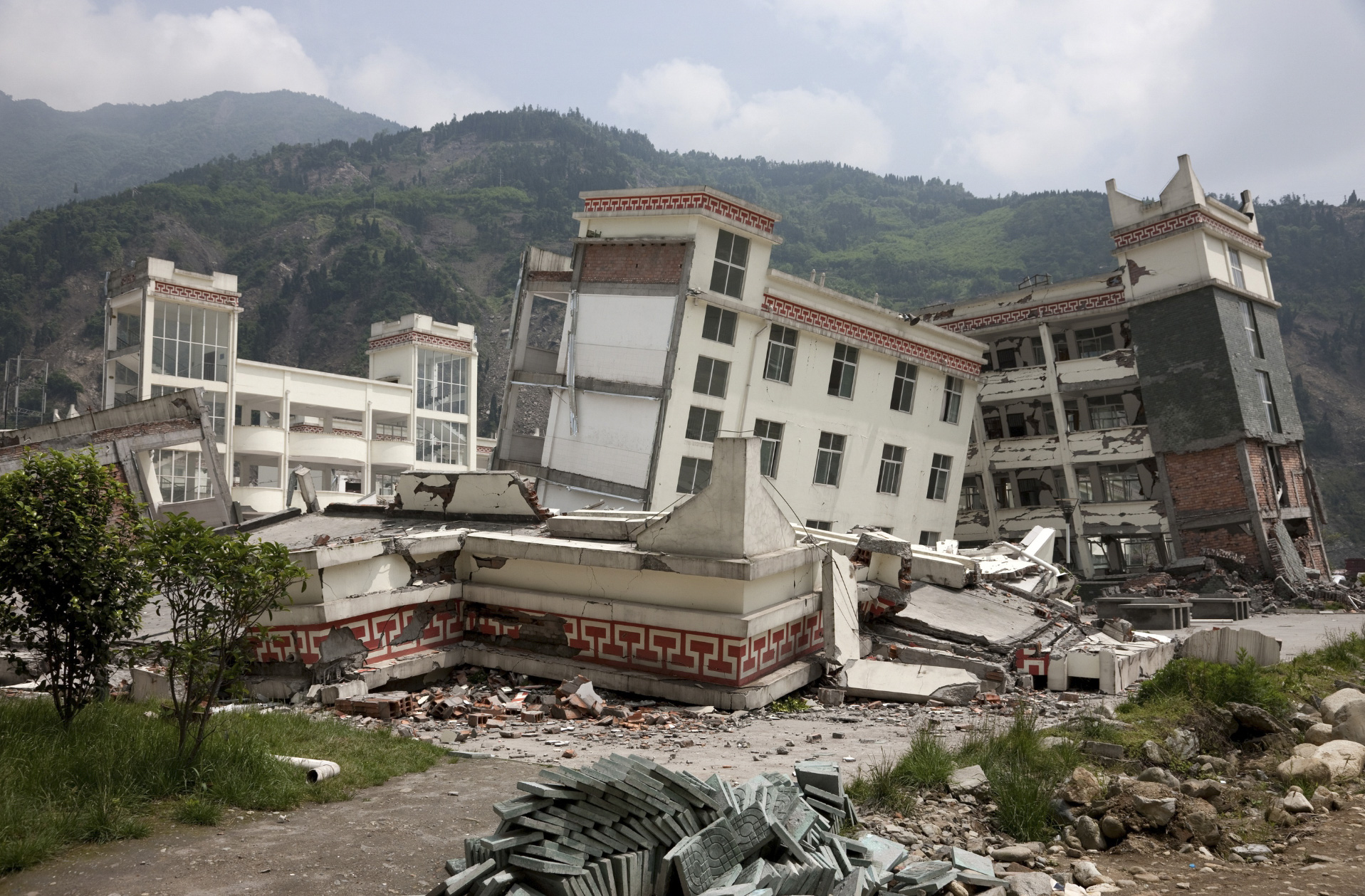
/Photo Courtesy of Counterpart International
Is the United States prepared to respond to the international assistance needs of today and tomorrow? This blog is part of MFAN's new series, "Moving Us Closer to Operational Readiness: Critical Needs for U.S. International Assistance." This series draws on the expertise of MFAN's members to explore the specific core functions needed at the State Department to manage effective development and foreign assistance programs.
For decades, governments and development practitioners have worked to ensure that foreign assistance leads to lasting, locally sustainable outcomes. Yet despite evolving approaches and terminology over time, the core challenge remains the same: how to design assistance that strengthens local systems rather than creating long‑term dependence on external support.
This is especially relevant to the U.S. Department of State’s Agency Strategic Plan - Fiscal Year 2026 - 2030 that signals a commitment to transitioning aid to country partners, stating that “Developing nations want help fostering self-reliant growth, not assistance programs designed to create reliance on multilateral institutions and global non-profits.” As highlighted in MFAN’s recent report, the State Department can learn from organizations that have succeeded in transitioning programs to local actors as they explore and refine their transition models.
Against this context, this blog highlights four lessons learned from Counterpart International’s six decades of experience across diverse contexts, effectively transitioning program implementation to local actors who continue to lead and sustain activities long after U.S. government funding ends.
1) Design for transition from day one
Successful transitions should be built into program design from the outset. This requires intentional, trust-based partnerships in which local stakeholders - including government, civil society, and the private sector - help shape both goals and implementation strategies. Investing the time to build strong relationships in the country through multi-stakeholder dialogue is key to building collaboration and partnership-based solutions.
Counterpart's school feeding programs illustrate this approach. In multiple contexts, programs were designed with explicit transition pathways that enabled schools, national and local governments, and community groups to assume responsibility over time. These locally led systems continued to provide students with nutritious school meals long after Counterpart's direct involvement ended. This has sustained higher student attendance rates and educational and health outcomes.
In Senegal, for example, structured, multi‑stakeholder consultations with government, private sector actors, and community stakeholders produced “sustainability action plans” that guided the shift of school feeding programs from donor supported programming to national and local government. As a result, nearly 86 percent of the 270 schools targeted in the Saint‑Louis region continued to provide nutritious meals twice per week after the project closed in 2023, alongside sustained improvements in attendance and literacy outcomes.
“We had a dual responsibility: the obligation to succeed to prove that it was possible and that the project provided the solution for sustainable canteens…. Every school in Ndioum has at least one Sustainability Action Plan and a school granary.... Filling up the granary is no simple matter. We had to conduct ongoing outreach - practically door-to-door - through community engagement sessions and WhatsApp groups so that every community member understood the importance of their contribution, no matter how small.” – Gatta Diallo, Sukaabe Janngo facilitator, NDIOUM 6 Elementary School (Saint-Louis Region)
2) Leverage local assets and strengthen local systems
Sustainable transition depends on recognizing that significant capacity often already exists within local systems. This includes public and private institutions, civil society, financial intermediaries, funders, and community networks.
Rather than creating parallel structures, effective programs map and activate existing structures – strengthening what is already present and enabling local actors to assume leadership earlier in the process and incrementally take on more responsibilities, supported by resources and capacities that already exist within the local ecosystem.
In Niger, Counterpart worked through existing community and governance structures to establish multi-stakeholder platforms that brought together local government, community-based organizations, traditional leaders, the private sector, and citizens around locally defined priorities. Over time, informal citizen monitoring committees evolved into formalized community institutions that mobilized resources to meet community priorities. Even following the 2023 coup d'état in Niger, these community monitoring committees have continued to operate in health and education, demonstrating the resilience of programs embedded into existing systems.
3) Long term stewardship to build strong local organizations
The complexity of donor procurements, compliance, and reporting, results in structural barriers for local actors seeking to apply for funding. Until donors simplify these requirements,international development organizations continue to play a critical role as intermediaries, responsibly managing public resources while building local capacity.
Counterpart’s approach helps support partner organizations along a growth journey, ensuring that partners are prepared not only to implement projects, but also to independently steward donor resources and meet fiduciary and compliance standards.
In Mauritania, Counterpart supported the development of the Djikké Savings and Credit Mutual Fund, strengthening governance, credit systems, and service delivery. Over time, the institution expanded its reach with more than 1,400 microloans for more than 6,000 new clients - including nearly 400 associations, with an outstanding repayment rate of 94%. Today, decades later, Djikké continues to operate as a leading microfinance institution and works with a range of international partners, reflecting long-term institutional sustainability.
4) The path forward to improve transition outcomes
Experience across political, economic, and social contexts suggests several key principles for the U.S. Department of State to consider to improve transition outcomes.